Monday, June 23, 2014

Gluten Free Baked Tilapia w/Old Bay


Sunset at Sea of Galilee (Tiberias) in 1898.
 

Tilapia has been around at least 4,000 years. It became a Christian symbol as it was one of the three main types of fish caught in Biblical times from the Sea of Galilee. At that time they were called musht, or commonly now even "St. Peter's fish". The name "St. Peter's fish" comes from the story in the Book of Matthew about the apostle Peter catching a fish that carried a coin in it's mouth.

Technically, Tilapia is not a "true" soul food staple, but like a lot soul food dishes, it was adopted into the African American culture. Most dishes that are considered "Soul Food" can be attributed to the style of cooking


4 tilapia fillets, skinless
Sea salt and pepper
1 shallot, finely chopped
4 teaspoons olive oil, divided
1 teaspoon finely chopped fresh thyme leaves
1 teaspoon flaky sea salt
1 teaspoon Old Bay
Finely grated zest of 2 lemons


Preheat oven to 350°F.
 
Sprinkle shallot into baking dish large enough to place the fillets in a single layer. 

Completely rub each fillet with a teaspoon of olive oil.

Moderately season one side of each fillet with sea salt and pepper. In the baking dish, place fillets on top of chopped shallot, seasoned side down; and bake for 12 to 15 minutes or until the flesh flakes with a fork.

While baking, make the seasoning salt. Mix thyme, Old Bay, flaky salt and lemon zest in a small bowl until moist and clumpy. 

When the fish is done, sprinkle a small portion of the seasoning salt over each fillet.

Serve with any remaining seasoning salt if desired.

Wednesday, June 18, 2014

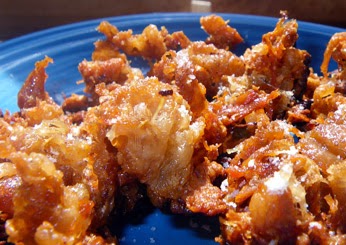
Gluten Free Deep Fried Chitterlings


Family of Slaves in a Georgia cotton field, circa 1850
Until emancipation, African-American food choices were restricted by the dictates of their slave owners. In colonial times, hogs were slaughtered in December. In order to maximize profits, slave owners commonly fed their slaves in the cheapest manner possible. At hog butchering time, the preferred cuts of meat were reserved for the master's use. The remains, such as fatback, snouts, ears, neck bones, feet, and intestines were given to the slaves for their consumption. Contrary to stereotypes, Slaves actually were fed more beef than pork because beef was cheaper.
 
                                                                                                                     The ChitterlingSite.com Retrieved: 18, June, 2014


Inspired by the Moore/Chism Family of Scotland Neck, North Carolina


2 pounds pre-cooked chitterlings
½ teaspoon red pepper flakes
2 large eggs, lightly beaten
1 Tablespoon water
Handful of Glutino Gluten Free Crackers (crumbed)
Vegetable Oil
Apple Cider Vinegar
Hot Sauce


Mix 1 Tablespoon of water and red pepper flakes with egg. Beat well.
 
Dip each piece of chitterling into the egg mixture then roll in crumbs.
 
Add enough vegetable oil in skillet for deep frying.
 
When the oil reaches 370°F, dip chitlins’ in until golden brown.
 
Serve with apple cider vinegar and Louisiana Hot Sauce next to some potato salad and a “mess” of collard greens. Don’t forget the cornbread.


Sometimes spelled as pronounced, (chitlins or chittlins) are the intestines of a pig that have been prepared as food. In various countries across the world, such food is prepared and eaten either as part of a daily diet, or at special events, holidays or religious festivities.


Note: Serve on Whole Foods Gluten Free Hamburger Buns.


Friday, June 13, 2014

Gluten Free Fried Pork Chops (Eastern Shore Style)


 6 pork chops, 1 inch thick
2 teaspoons seasoned salt
2 teaspoons garlic powder
2 Tablespoons Old Bay
1½ Tablespoon French’s Spicy Brown Mustard
1 teaspoon paprika
½ teaspoon black pepper
½ cup Bobs Red Mill All Purpose Gluten Free flour
½ cup vegetable oil
Louisiana Hot Sauce

Prepare pork chops 1 hour before cooking by triming fat and rinsing the chops thoroughly under cold running water. Pat chops dry with heavy paper towels and set aside.

In a small bowl, mix seasoned salt, garlic powder, prepared mustard, paprika and black pepper and Old Bay.

Rub ¾ teaspoon of seasoning on each chop. Completely coat each chop with flour then wrap with Saran Wrap, and refrigerate for 1 hour before cooking.
Heat vegetable oil in cast-iron skillet over medium heat. When the skillet is hot, add pork chops and brown on both sides for 10-12 minutes.

Remove chops from skillet and set on paper towels to drain grease. Add Louisiana Hot Sauce and serve.